Short answer: yes. Azelaic acid and retinoids are one of the more compatible pairings in skincare, and dermatologists combine them routinely.
The longer answer is about sequencing and pacing, because the reason people run into trouble with this combination is almost never chemical incompatibility. It is doing too much too quickly.
Why They Work Well Together
Azelaic acid and retinoids act on different parts of the same problems, which is what makes them complementary rather than redundant.
Retinoids speed up cell turnover, normalize how skin cells shed inside the pore and stimulate collagen. Tretinoin is the prescription form. Retinol and retinal are non-prescription forms that the skin converts to the active molecule.
Azelaic acid inhibits tyrosinase to reduce pigment production, calms inflammation through kallikrein-5, cathelicidin and PPAR-gamma pathways, reduces acne-causing bacteria and normalizes keratinization.
The overlap is small. The additive benefit is largest in exactly the situations people are usually treating: acne with discoloration, or discoloration with texture concerns.
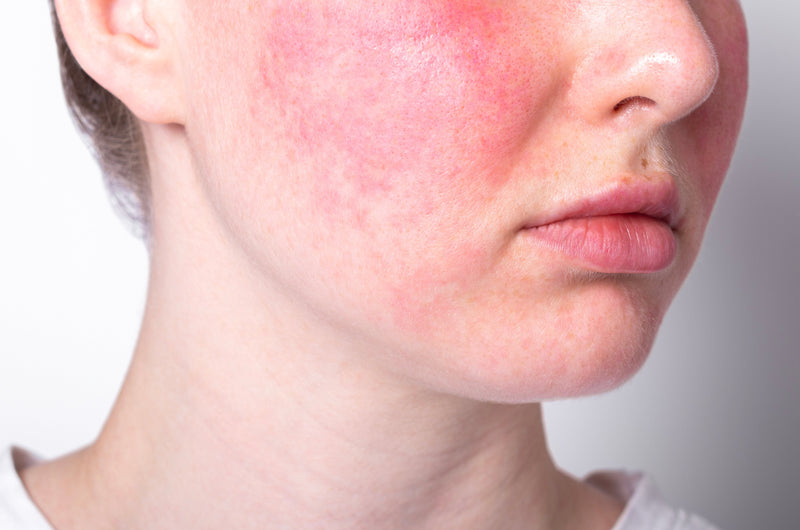
There is also a practical argument. Retinoids commonly cause irritation and redness in the first weeks. Azelaic acid is anti-inflammatory and does not increase photosensitivity, which makes it an unusually good partner rather than a competing irritant.
The Real Risk Is Cumulative Irritation
Neither ingredient deactivates the other. Azelaic acid does not break down retinoids, and retinoids do not neutralize azelaic acid. The pH concerns people raise about acid and retinoid layering come from AHA and BHA chemistry and do not transfer cleanly here.
What does happen is that two actives that each cause mild dryness and stinging in the adjustment period can add up to more irritation than either alone. A compromised barrier then makes everything worse, including the acne and redness you were treating.
So the goal is to combine them without stacking the adjustment periods.
How to Combine Them
If you are new to both, introduce one at a time. Start with azelaic acid, which is generally the gentler of the two, and use it nightly for two to four weeks. Then add the retinoid twice a week and build up.
If you already use a retinoid, add azelaic acid in the morning. This is the simplest approach for most people and it is the one worth trying first.
Morning and night split. Azelaic acid in the morning, retinoid at night. Azelaic acid does not increase sun sensitivity, so daytime use is fine. Retinoids are best at night. This separates the two entirely and keeps both at full frequency.
Alternating nights. If you prefer both at night, use azelaic acid one evening and the retinoid the next. Slower, but easier on reactive skin.
Same routine, layered. Some people tolerate both in one evening. Apply to dry skin, thinner product first, and wait a few minutes between. This is the highest-irritation option and is best attempted only once both are already tolerated separately.
If you are using prescription tretinoin, tell your prescriber what else you are applying. They may want to adjust your strength or frequency.
Signs You Are Doing Too Much
Back off if you see persistent stinging that does not settle within a few minutes of application, tightness, flaking that does not resolve, or new sensitivity to products you previously tolerated.
Reduce frequency rather than stopping entirely. Drop the retinoid to twice a week, keep a simple moisturizer, and rebuild once the skin settles.
Mistakes to Avoid
🚫 Starting both in the same week:
This is the single most common reason people conclude the combination does not work for them.
🚫 Adding exfoliating acids on top:
Two actives is usually the ceiling. A glycolic toner on top of both is what turns a manageable routine into a barrier problem.
🚫 Applying to damp skin:
Both absorb more aggressively on wet skin, which increases irritation without increasing benefit.
🚫 Skipping moisturizer to avoid dilution:
Moisturizer does not meaningfully reduce efficacy, and it substantially improves tolerability.
🚫 Skipping sunscreen:
Retinoids increase photosensitivity even though azelaic acid does not, so the routine as a whole requires daily SPF.
Who Should Be Cautious
Anyone with a compromised barrier, active eczema or perioral dermatitis should stabilize the skin before combining actives.
If you are pregnant or trying to conceive, retinoids are generally avoided. Azelaic acid is classified as pregnancy category B for topical use and is frequently chosen in that situation. Confirm with your own physician.
Final Thoughts
This pairing is not a compatibility question so much as a pacing question. The ingredients complement each other well. The routine only fails when both are introduced at once and the skin never gets a chance to adjust to either.