


Azelaic Acid PR Kit
15% Azelaic Acid Complex Advanced Clarifying Serum


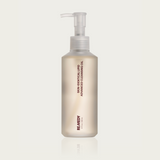
Skin-Identical Cleansing Oil
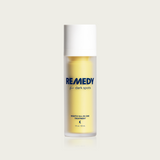
REMEDY 15% Azelaic Acid Complex
STUDY 1 · IN VIVO : SKIN-ADAPTIVE pH
PH-METRY
On human facial skin in vivo, skin-surface pH settled to 5.2 within 60 minutes of application, versus an untreated site that held flat. The formula is built at pH 5.9 for stability and elegance, then moves with the skin's own acid mantle, ending below azelaic acid's second pKa and inside the physiological range of 4.6 to 5.8.
Graph 2, TR-DLY023-26-A-1-R0. Mean values of pH, shown as mean plus standard deviation, n=11.
STUDY 2 · EX VIVO : TYROSINASE GENE EXPRESSION
RT-QPCR
In UV-exposed ex vivo human skin, the serum reduced tyrosinase gene expression versus UV-irradiated controls. Tyrosinase is the rate-limiting enzyme in melanin production, so suppressing it at the gene level acts at the earliest stage of pigmentation.
Figure 2, TR-DLY008-26-E-1-R0. Tyrosinase gene expression by RT-qPCR in UV-exposed ex vivo human skin cultures, average fold-change, shown as mean plus standard deviation of three replicates. ANOVA with Dunnett's post hoc.
STUDY 3 · EX VIVO : KALLIKREIN-5 PRODUCTION
IMMUNOFLUORESCENCE
In ex vivo human skin under inflammatory stress, the serum reduced kallikrein-5 production versus a stimulated control. KLK5 is a serine protease in the outer epidermis and the main mediator involved in rosacea inflammation, so bringing it down supports orderly shedding and a calmer barrier.
Figure 2, TR-DLY008-26-E-4-R0. Semi-quantification of Kallikrein-5 by immunofluorescence in ex vivo human skin cultures under IL-4 and IL-13 stimulus, shown as mean plus standard deviation of six images. ANOVA with Dunnett's post hoc.
HOW IT WAS TESTED
Single-center clinical study, n=11 (1)
Ex-vivo human skin, donated after surgery (2,3)
Single-center dermatologist-evaluated clinical study, n=40 (4)
Azelaic acid is asked to do three jobs. We measured all three.
WHAT'S NOT IN IT
-
Propylene glycol
None -
Alcohols
None -
Hydroquinone
None -
Fragrance
None

"Clinically tested" has no regulated definition in skincare. At REMEDY, we test our products with our patients in mind.
Two in vivo studies. The first confirmed the formula is pH adaptive, working with your skin's natural chemistry. The second used VISIA imaging analysis to measure visible improvement in dark spots, redness, and acne.
Two ex vivo studies. The first demonstrated the formula works at a molecular level against tyrosinase, the enzyme behind excess pigment. The second showed it reduces kallikrein-5, a protein linked to redness.
DR. MUNEEB SHAH, CEO AND FOUNDER OF REMEDY
The One Active Dermatologists Reach For, in a Serum That Feels Like Water.
Despite how long dermatologists have relied on azelaic acid, we had trouble finding a formula that delivered it without grit, propylene glycol, alcohols, or fragrance. Our azelaic serum does exactly that, pairing 10% azelaic acid with 5% glycinated azelaic acid in a fully solubilized serum that helps reduce visible redness, fade dark spots, and improve blemish-prone skin, making it easier than ever to use an active this strong every day.
Dr. Muneeb Shah


3rd Party Clinical Results
-65.2%
expression of tyrosinase the enzyme behind melanin, where dark spots begin*
-39.5%
kallikrein-5 the protease behind inflammation, where redness begins*
97.5%
clinically-proven to improve dark spots and redness**
*Measured in ex vivo human skin **Single-center, dermatologist-evaluated clinical study (n=40)
Concerns
Benefits
- 1 Blemish-prone skin
- Blemish-prone skin
- Helps visibly improve the look of blemishes
- 2 Dark spots and uneven tone
- Dark spots and uneven tone
- Helps fade the appearance of dark spots
- 3 Redness
- Redness
- Helps visibly reduce the look of redness
Benefits
- 1 Helps visibly improve the look of blemishes
- 2 Helps fade the appearance of dark spots
- 3 Helps visibly reduce the look of redness


10% Pure Azelaic Acid
Reduces the look of redness, fades the appearance of dark spots, improves blemishes¹
¹ Sieber MA, Hegel JK. Azelaic acid: properties and mode of action. Skin Pharmacol Physiol. 2014

5% Potassium Azeloyl Diglycinate
water-soluble azelaic acid derivative that helps improve uneven tone, reduce the look of redness and blemishes, and support a more balanced complexion¹
¹Lueangarun S, Tempark T. Effects of trans-4-(aminomethyl) cyclohexanecarboxylic acid/potassium azeloyl diglycinate/niacinamide topical emulsion in Thai adults with melasma: a single-center, randomized, double-blind, controlled study. Clin Cosmet Investig Dermatol. 2014
Niacinamide
Vitamin B3 derivative that helps prevent new discoloration from depositing in the skin¹
¹ Berson, D.S.; Osborne, R.; Oblong, J.E.; Hakozaki, T.; Johnson, M.B.; Bissett, D.L. Niacinamide: A Topical Vitamin with Wide-Ranging Skin Appearance Benefits. In Cosmeceuticals and Cosmetic Practice; John Wiley & Sons: Hoboken, NJ, USA, 2013; pp. 103–112
Acetyl Glucosamine
Amino sugar that amplifies the benefits of niacinamide to prevent new dark spots¹
¹ Bissett DL, Robinson LR, Raleigh PS, Miyamoto K, Hakozaki T, Li J, Kelm GR. Reduction in the appearance of facial hyperpigmentation by topical N-acetyl glucosamine. J Cosmet Dermatol. 2007
Vitamin B12
Essential vitamin that helps soothe skin and gives the serum its natural pink hue⁴
¹ Stücker M, et al. Topical vitamin B12, a new therapeutic approach in atopic dermatitis. Br J Dermatol. 2004
Beta-Glucan
Soothing polysaccharide that helps calm skin and support hydration⁵
Du B, Bian Z, Xu B. Skin health promotion effects of natural beta-glucan.
Hero ingredients
-
10% Pure Azelaic Acid
Reduces the look of redness, fades the appearance of dark spots, improves blemishes¹

¹ Sieber MA, Hegel JK. Azelaic acid: properties and mode of action. Skin Pharmacol Physiol. 2014

-
5% Potassium Azeloyl Diglycinate
water-soluble azelaic acid derivative that helps improve uneven tone, reduce the look of redness and blemishes, and support a more balanced complexion¹
¹Lueangarun S, Tempark T. Effects of trans-4-(aminomethyl) cyclohexanecarboxylic acid/potassium azeloyl diglycinate/niacinamide topical emulsion in Thai adults with melasma: a single-center, randomized, double-blind, controlled study. Clin Cosmet Investig Dermatol. 2014
-
Niacinamide
Vitamin B3 derivative that helps prevent new discoloration from depositing in the skin¹

¹ Berson, D.S.; Osborne, R.; Oblong, J.E.; Hakozaki, T.; Johnson, M.B.; Bissett, D.L. Niacinamide: A Topical Vitamin with Wide-Ranging Skin Appearance Benefits. In Cosmeceuticals and Cosmetic Practice; John Wiley & Sons: Hoboken, NJ, USA, 2013; pp. 103–112
-
Acetyl Glucosamine
Amino sugar that amplifies the benefits of niacinamide to prevent new dark spots¹

¹ Bissett DL, Robinson LR, Raleigh PS, Miyamoto K, Hakozaki T, Li J, Kelm GR. Reduction in the appearance of facial hyperpigmentation by topical N-acetyl glucosamine. J Cosmet Dermatol. 2007
-
Vitamin B12
Essential vitamin that helps soothe skin and gives the serum its natural pink hue⁴

¹ Stücker M, et al. Topical vitamin B12, a new therapeutic approach in atopic dermatitis. Br J Dermatol. 2004
-
Beta-Glucan
Soothing polysaccharide that helps calm skin and support hydration⁵

Du B, Bian Z, Xu B. Skin health promotion effects of natural beta-glucan.
-
Azelaic Acid PR Kit
Full Ingredients
Water (Aqua), Azelaic Acid, Ethoxydiglycol, Sodium Hydroxide, Propanediol, Pentylene Glycol, Potassium Azeloyl Diglycinate, Niacinamide, Butylene Glycol, 1,2-Hexanediol, Acetyl Glucosamine, Glycerin, Beta-Glucan, Sodium Hyaluronate, Xanthan Gum, Centella Asiatica Extract, Sodium Metabisulfite, Camellia Sinensis Leaf Extract, Glycyrrhiza Glabra (Licorice) Root Extract, Cyanocobalamin, Tocopherol, Phenoxyethanol, Ethylhexylglycerin.The science was always good. The texture finally caught up.
Azelaic acid doesn't dissolve easily in water or oil, so it tends to sit in a formula as tiny particles you can feel.
We dis(solved) it into a high-potency, fully solubilized serum that feels like water, without sacrificing active strength.

suspended FORMULA

REMEDY, solubilizeD
A smarter solvent system
Getting azelaic acid to a water-light texture takes a solvent.
We use ethoxydiglycol, chosen for its low irritancy profile.
- NO propylene glycol
- NO alcohol
- NO fragrance


Doctor's Note
Azelaic acid layers well with the rest of your routine and has complementary benefits alongside retinoids, vitamin C, and copper peptides. If your skin runs reactive, use it on its own for the first week before reintroducing other actives.
Doctor's Note
A little crystallization around the dropper or the bottle neck is normal, and it is the chemistry working as designed.
-
How to use
After cleansing, apply a dime-size amount to dry skin and let it dry down before your next step. Start once a day and build to twice daily as your skin adjusts. Follow with moisturizer at night and sunscreen in the morning.

-
How it works
This formula leads with 10% pure azelaic acid plus 5% glycinated azelaic acid. Around it sit three complexes: a triple-pathway brightening stack of niacinamide, acetyl glucosamine and licorice root, a soothing recovery complex of Centella, beta-glucan and vitamin B12, and advanced hydrators in sodium hyaluronate and glycerin.
Where it fits in your routine
Apply to dry skin. Start once daily, build to twice.
Compatible with retinoids, vitamin C and copper peptides if you use them.
-
Cleanse
Cream-to-Foam Cleanser
-
Treat
15% Azelaic Acid Complex
-
Moisturize
Rich Cream Moisturizer
-
Protect
SPF of your choice


What to expect, and when
Most clinical studies with azelaic acid are measured at 8 and 12 weeks. Most people stop at four. Do not give up.
Blemishes
Breakouts and inflammation respond first.
Redness
The look of surface redness begins to settle.
Dark spots
Pigment is the slowest to change, and the most worth waiting for.

Reviews

The RIGHT Remedy, for every CONCERN




Azelaic Acid FAQs
Azelaic acid works through a different mechanism than retinoids, so it is not a like-for-like swap, but it addresses many of the same concerns. If retinol runs too irritating for your skin, this is a reasonable alternative.
Yes, and they work well together. If your skin handles actives well, use the azelaic serum morning and night, applying it first at night, letting it dry, then following with Dark Spots. If your skin is sensitive, alternate: azelaic in the morning, Dark Spots at night.
Blemishes tend to respond first, around two weeks. Redness around four. Dark spots are slowest, four to eight weeks, and the most worth waiting for. Results compound with continued use.
Avoid using it at the same time as high-strength direct acids, like strong AHA or BHA exfoliants. Everything else layers fine. If you are new to azelaic acid or your skin is reactive, patch test and build frequency slowly.
Yes, and it is the chemistry working as designed. The formula is held as a stable salt at pH 5.9 in the bottle, which is what keeps the acid fully dissolved. A little crystallization at the neck or dropper is expected.


