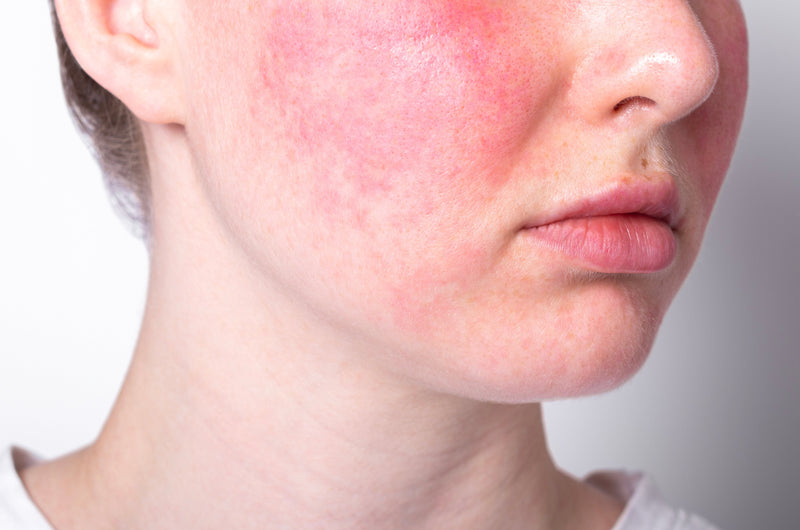
If you have compared azelaic acid products, you have seen 10%, 15%, 20% and a few numbers in between, some available on a shelf and some only with a prescription. It is a reasonable thing to be confused by.
Here is what the numbers mean, where the evidence actually sits, and why concentration alone is a poor way to compare two products.
What the Concentrations Are
Prescription. In dermatology, azelaic acid is prescribed as a 15% gel or foam and a 20% cream. These are regulated as drugs, and they carry approved indications, most commonly rosacea and acne depending on the formulation and country.
Non-prescription. Cosmetic azelaic acid products generally sit between 5% and 15%, and typically combine it with other ingredients rather than using it alone. Some now reach 15% as a complex, such as Remedy's 15% Azelaic Acid Complex Advanced Clarifying Serum (10% pure azelaic acid + 5% glycinated azelaic acid) in a fully solubilized formula.
The regulatory distinction matters more than it looks. A prescription product has been through trials for a specific indication and can make treatment claims. A cosmetic product cannot make those claims regardless of what concentration it contains.
Why Concentration Is Not the Whole Story
Here is the part most comparisons miss. How much active is in the bottle is not the same as how much reaches the skin.
The clearest published illustration comes from comparing prescription vehicles. A 15% azelaic acid gel delivered 25.3% of the active into the viable layers of the skin. A 20% cream delivered 3.4%. The cream contained more azelaic acid. The gel delivered roughly seven times more of it where it needed to go.
The variable there is the vehicle, not the percentage.
This matters because azelaic acid is poorly soluble in water. It has traditionally been suspended in creams as fine solid particles rather than dissolved. That is where the familiar gritty texture comes from, and it is also why formulation and delivery deserve as much attention as the number on the front of the box.
What the Evidence Supports
Almost all of the published clinical evidence for azelaic acid was generated at 15% and 20%.
Rosacea. A randomized trial of 961 subjects found 15% azelaic acid foam significantly better than vehicle on investigator-assessed success (32.0% versus 23.5%), inflammatory lesions (61.6% versus 50.8% reduction) and erythema (61.5% versus 51.3%). In a head-to-head of 251 subjects, 15% gel outperformed 0.75% metronidazole gel at 15 weeks.
Melasma. A 329-subject comparison of 20% azelaic acid against 4% hydroquinone over 24 months found no significant difference in overall improvement (64.8% versus 72.5%) or pigment improvement (84.2% versus 89.2%), with no severe adverse reactions such as allergic sensitization in the azelaic acid group.
Acne. At 20%, azelaic acid cream reduced comedones and follicular hyperkeratinization comparably to retinoic acid.
Post-acne marks. A 12-week randomized, double-blind, placebo-controlled trial of 15% gel showed significant improvement in both the red marks and the brown ones left after breakouts.
For concentrations below 15%, the published dose-response data is thin. Reviews note that cosmetic products typically use lower concentrations alongside other actives, without establishing separate efficacy data at those levels. That is a gap in the published record rather than evidence that lower concentrations do not work, and as the delivery figures above show, concentration is only one of several variables that determine how much active reaches the skin.
Where published data is limited, look for brands that have tested their finished formula in a third-party clinical study. Remedy's 15% Azelaic Acid Complex, for example, was clinically proven to improve dark spots and redness in 97.5% of participants in a single-center, dermatologist-evaluated clinical study (n=40).
Choosing Between Them
See a dermatologist if you have diagnosed rosacea or moderate to severe acne, or if you have used a product consistently for three months without meaningful change. Having a clinician assess what you are actually treating and monitor the outcome is worth more than any percentage point, and they are best placed to say whether a prescription is warranted.
Non-prescription suits you if you are managing milder concerns, general redness, dark marks after breakouts or uneven tone, or if you want something you can use long term without a prescription. Cosmetic formulas also tend to be built for daily tolerability, and many combine azelaic acid with complementary ingredients.
Either way, consistency over 8 to 12 weeks will affect your result more than the difference between 10% and 15%.
Mistakes to Avoid
🚫 Assuming higher always means better:
The vehicle data above shows a 20% product delivering far less active than a 15% one. Concentration is one variable among several.
🚫 Assuming gritty means strong:
Grit is undissolved particulate. It is a formulation artifact, not a measure of potency.
🚫 Switching products every few weeks:
Pigment endpoints are measured at 8 and 12 weeks in trials. Product-hopping guarantees you never reach the timepoint where the data says results appear.
🚫 Reading a cosmetic product as a substitute for prescription treatment for a diagnosed condition:
They are different regulatory categories doing different jobs.
Who Should Be Cautious
Azelaic acid is well tolerated at prescription strength, with mild transient redness, scaling, itching and burning as the most common effects. It does not induce allergic sensitization or photodynamic reactions.
It is classified as pregnancy category B for topical use, which is one reason it is often chosen when retinoids are not an option. Confirm with your own physician.
Final Thoughts
The gap between 10% and 15% is smaller than the gap between a well-formulated product and a poorly formulated one. If you are choosing between two options, look at the vehicle, the texture, whether the finished formula has been clinically tested, and whether you will actually use it twice a day for three months. Those variables will decide your outcome more reliably than the number on the label.