The breakout is gone. The red mark it left behind is not. Months later, you are still looking at a flat pink or red patch where a pimple used to be, and none of your dark spot products are touching it.
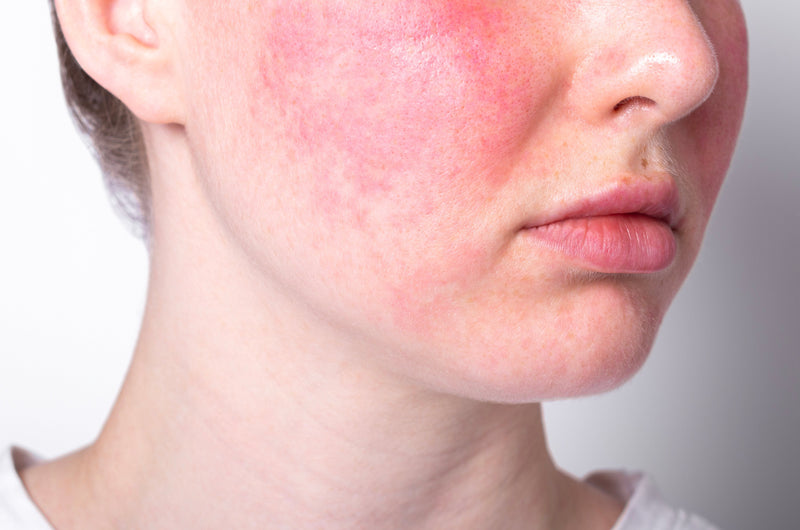
That is post-inflammatory erythema, and it is treated differently from the brown marks people usually mean when they say acne scars.
What Is Post-Inflammatory Erythema?
Post-inflammatory erythema, or PIE, is the flat red or pink discoloration left after an inflammatory breakout heals. It happens when the inflammation from a lesion damages or dilates the small blood vessels in the upper layers of the skin. What you are seeing is blood flow, not pigment.
Two quick ways to tell PIE from post-inflammatory hyperpigmentation, the brown version:
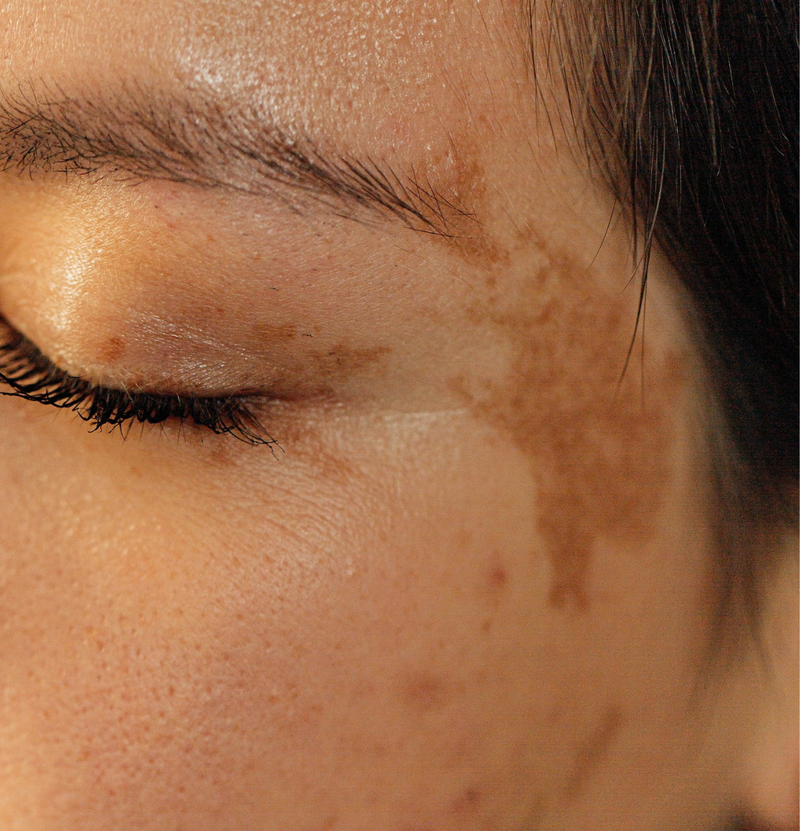
Color. PIE is pink, red or purple. PIH is tan, brown or grey-brown.
The press test. Press gently on the mark with a fingertip or a clear glass slide. PIE blanches, meaning the color temporarily fades as you push the blood out of the vessels. PIH does not change.
PIE is more common in lighter skin tones, and PIH is more common in deeper ones, but both can occur in anyone. Many people have both at the same time, on different marks.
Neither is a true scar. A scar involves a change in the texture of the skin, a pit or a raised area. PIE and PIH are flat discoloration, and flat discoloration resolves.
Why Most Dark Spot Products Do Not Help
This is the part that frustrates people. Brightening ingredients work by interfering with melanin production. Since PIE is not melanin, an ingredient that only inhibits pigment has nothing to act on.
That is why someone can use a vitamin C serum faithfully for three months, watch their brown marks fade, and see no change at all in the red ones.
Treating PIE means addressing inflammation and the blood vessels that inflammation left behind.
What the Research Shows
Azelaic acid is one of the few topical ingredients with direct trial evidence in PIE specifically, rather than evidence borrowed from acne or rosacea studies.
In a 12-week randomized, double-blind, placebo-controlled trial, 72 patients with acne-related marks were assigned to either 15% azelaic acid gel twice daily or an identical gel without the active. Sixty completed the study.
By week 8, the azelaic acid group showed significantly greater improvement in post-inflammatory erythema than both their own baseline and the placebo group. That improvement held at week 12. Hemoglobin readings, which measure the blood in the tissue that produces the red color, dropped significantly in the treated lesions.
The same trial measured the brown marks separately and found melanin content significantly reduced at 12 weeks. Skin barrier function was not adversely affected, and quality-of-life scores improved more in the treated group.
That combination matters. Most people with post-acne marks have red ones and brown ones at the same time, and a single ingredient that acts on both is more practical than layering two products.
Why Azelaic Acid Works on Red Marks
The mechanism is anti-inflammatory rather than anti-pigment.
Azelaic acid inhibits kallikrein-5 and cathelicidin, which reduces LL-37, a peptide involved in the vascular and inflammatory changes that also underlie rosacea. It activates PPAR-gamma, which suppresses NF-kB and the inflammatory cytokines downstream. It also scavenges reactive oxygen species released by neutrophils during inflammation.
Put simply, it works upstream of the redness rather than trying to bleach it.
The pigment mechanism runs in parallel and independently, through tyrosinase inhibition, which is why the same ingredient handles the brown marks in the same application.
How to Use It for PIE
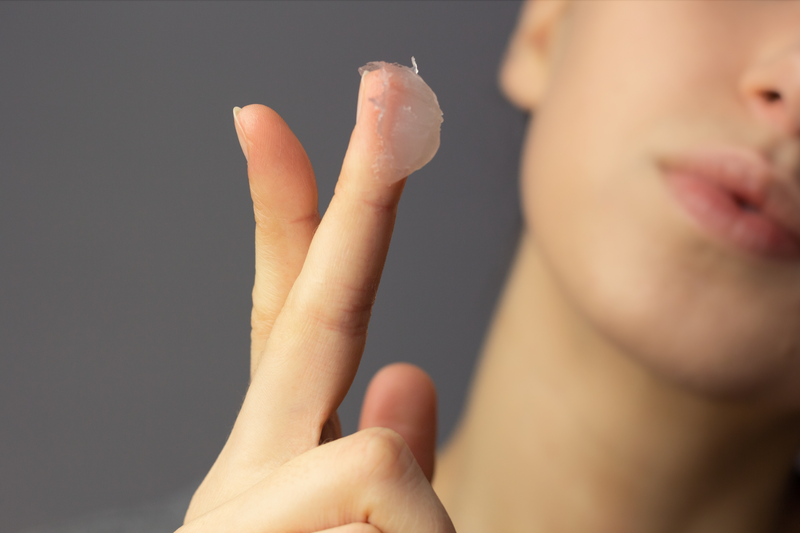
Apply to clean, dry skin, once daily to start and building to twice as tolerated. Treat the whole affected area, not just the individual marks, since new lesions are still forming in the surrounding skin.
Sunscreen every day, without exception. UV exposure prolongs the inflammatory response and worsens both kinds of post-acne marks.
Expect the timeline from the trial. Significant change was measured at week 8 and continued at week 12. Judging results at four weeks will lead you to stop something that was working.
Mistakes to Avoid
🚫 Treating PIE with brightening products alone:
Vitamin C, kojic acid and hydroquinone act on melanin. They do not act on dilated vessels.
🚫 Picking:
The most reliable way to make a red mark last longer is to extend the inflammation that caused it.
🚫 Aggressive exfoliation:
Scrubbing an inflamed area adds inflammation, which is the thing driving the redness in the first place.
🚫 Ignoring the active breakouts:
PIE is downstream of inflammation. Controlling the breakouts is what stops new marks from forming.
Who Should Be Cautious
Azelaic acid is well tolerated across skin types, including sensitive skin, and does not increase photosensitivity. Mild stinging, redness or flaking can occur in the first few weeks and usually settles.
If redness is widespread rather than confined to old breakout sites, or if it comes with flushing, visible vessels or a burning sensation, that may be rosacea rather than PIE and is worth a dermatologist's assessment.
Final Thoughts
Post-inflammatory erythema is one of the most common complaints after acne and one of the least well served by the products marketed for it. If your red marks have not responded to a dark spot routine, that is not a failure of consistency. It is a mismatch between the ingredient and the problem.